

How to Choose the Best Outdoor Wood Boiler for Your Home
Posted by SEBASTIAN ZOTA
If you're tired of paying for oil, propane, or electric heat and have access to firewood, an outdoor wood boiler can take over most or all of that heating from one unit in the yard. There are dozens of brands and models, though, and a boiler that's too small, hard to feed, or impossible to get parts for will cost you more than it saves.
The best outdoor wood boiler for your home is one that's sized to your heating load, suited to the wood you have, allowed where you live, and backed by parts you can still buy years from now. This guide walks through each of those factors and helps you choose the right one for you.
Is an Outdoor Wood Boiler the Same as an Outdoor Wood Furnace?
For the most part, yes. An outdoor wood boiler is a wood-burning unit that sits outside and heats water, which is then piped into the house to heat it. Because the unit heats the home, many owners and manufacturers call it a furnace, and some call it a stove after the firebox inside. The EPA uses the term hydronic heater. The names are used interchangeably, and this guide mostly uses boiler.
How an Outdoor Wood Boiler Works
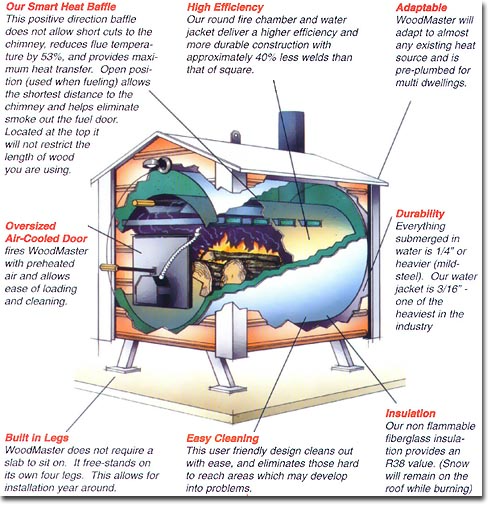
An outdoor wood boiler has a firebox surrounded by a water jacket. As the fire burns, it heats that water to somewhere between 160°F and 180°F. An aquastat watches the water temperature and calls for more air when it drops below the setting, either by running the blower or by triggering a damper solenoid that pulls the damper open. Once the water is back up to temperature, the aquastat shuts off the air and the fire slows down.
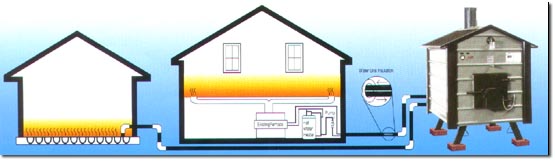
From there, a circulating pump sends the hot water through insulated PEX tubing buried between the boiler and the house. Inside, the water passes through one or more heat exchangers, then returns to the boiler to be reheated.
- Forced-air heat: A water-to-air heat exchanger sits in the furnace plenum and heats the air your blower already moves through the ductwork.
- Indoor boilers and radiant floors: Most outdoor wood boilers are unpressurized and open to the air, so a plate heat exchanger keeps that water separate from a pressurized indoor system. Our guide to connecting to an indoor boiler walks through the setup.
- Domestic hot water: A sidearm or plate heat exchanger on the water heater preheats the water you use for showers and laundry, and our guide to installing a sidearm exchanger shows how it connects to the tank.
What to Look for in an Outdoor Wood Boiler
The boiler itself decides how much wood you'll burn, how often you'll load it, and how long it will last. Four features matter most when you compare models.
Size the Boiler to Your Heating Load
Manufacturers rate outdoor wood boilers by BTU output and by the square footage they can heat. Those ratings assume a reasonably insulated home and a short pipe run, so an older, drafty house or a long run to the boiler needs more capacity than the square footage alone suggests. Add up everything the boiler will heat, including domestic hot water, a garage, or a pool, and size for that total.
Oversizing causes its own problems. A traditional boiler that's much larger than the load spends more time idling with the damper closed, and a smoldering fire burns less completely and builds up creosote faster.
Compare Firebox Size and Water Capacity
A larger firebox holds more wood, which means fewer trips to the boiler on cold days, and it accepts longer, rougher pieces with less cutting and splitting. Water capacity works the same way. A larger water jacket stores more heat, so the temperature stays steadier between loads and the boiler recovers more easily when the house calls for heat. Check the door opening too, since it decides how large a split you can actually load.
Check the Steel and Build Quality
The firebox and water jacket take constant heat, moisture, and corrosion, so the steel matters. Stainless steel resists corrosion but costs more. Mild steel is common and can last a long time when the water is treated and tested regularly. Either way, look at the steel thickness, the quality of the welds, how well the unit is insulated, and how easily you can reach the parts you'll maintain, such as the blower, the aquastat, and the door gasket.
Look at the Controls and Power Needs
Every outdoor wood boiler relies on electricity for its circulating pump, and most also need it for a blower or damper. Traditional units tend to have simple controls with an aquastat, a solenoid or blower, and a pump. EPA-certified units often add more sensors and electronic controls. Simpler controls mean fewer parts that can fail. Whichever type you choose, plan for power outages, since a pump that stops can let the water in the boiler overheat. A pump battery backup keeps water moving until the power comes back.
Traditional vs. EPA-Certified Outdoor Wood Boilers
One of the biggest decisions is whether to buy a traditional outdoor boiler or a newer EPA-certified model. The rules affect what you can buy new, but they don't touch the unit you already own.
What the EPA Rules Require
Since 2020, new wood-fired hydronic heaters sold in the United States have had to meet EPA's Step 2 emission limit. That limit is 0.10 pounds of particulate per million BTU of heat output at each burn rate, or 0.15 if the unit is tested with cordwood. The standard applies only to new units. Boilers that were already installed can stay in service, and you can keep them running with replacement parts. Our guide to EPA wood heater regulations covers the rules in more detail.
Traditional Outdoor Wood Boilers
Traditional boilers use a single large firebox inside a water jacket. They're simple to run, they're forgiving of larger or less-than-perfect wood, and they have fewer controls to troubleshoot. Many owners keep these units running for years with regular maintenance and replacement parts. The trade-off is that they burn more wood and produce more smoke than certified models, especially when idling, and that's why setback and chimney rules matter so much for them.
EPA-Certified and Gasification Boilers
Most EPA-certified outdoor boilers use gasification, which burns the gases released from the wood in a second, very hot chamber. That makes them cleaner and more efficient, so they use less wood for the same heat. They cost more, though, and they depend on dry, split wood below about 20% moisture, which means seasoning your firewood becomes an even more important part of running the boiler. Many owners also find that the extra controls and components add maintenance, and that burn times can be shorter than they were used to with a traditional unit.
Check Local Rules Before You Buy
Many states and towns have their own rules for outdoor wood boilers, and they usually cover where the boiler can sit and how tall the chimney has to be. In Connecticut, for example, a boiler installed after July 2005 has to be at least 200 feet from the nearest home it doesn't serve. Its chimney also has to be taller than the roof peaks of homes within 500 feet, up to 55 feet. Some towns go further and ban outdoor boilers outright or allow only EPA-certified models. Check with your state environmental agency and your town before you buy, since local limits can take certain spots on your property or certain models off the table.
Plan the Boiler's Location and Underground Lines
Where the boiler sits affects how much heat reaches the house. Every foot of underground line loses some heat, so a shorter run with well-insulated pipe delivers more of the boiler's output indoors. The spot you pick also needs a clear trench path to the house, enough distance to meet any setback rules, and room to stack wood nearby with an easy path for carrying it in winter. High-quality underground pipe insulation is one of the easiest ways to protect efficiency on a longer run.
Decide What Else the Boiler Will Heat
An outdoor wood boiler can heat much more than the house, and planning for that up front helps you size it correctly. Common additions include:
- Domestic hot water: A heat exchanger on the water heater supplies most of your hot water during the heating season.
- A garage, shop, or second building: An extra line and heat exchanger or unit heater can heat outbuildings from the same boiler.
- Radiant floors: A plate heat exchanger connects the boiler to an in-floor system.
- A pool or hot tub: Our guide to heating a pool walks through the setup.
Choose a Brand You Can Get Parts For
An outdoor wood boiler is a long-term purchase, and the parts that wear out along the way decide how long it keeps running. Blowers, aquastats, solenoids, door gaskets, circulating pumps, and water treatment all need attention over the life of the boiler. Several manufacturers have closed since the EPA rules took effect, which has left owners searching for parts for units that still work fine.
Before you buy, check that replacement parts for the model are easy to find and reasonably priced. Alternative Heating & Supplies stocks parts for more than 40 outdoor wood boiler brands, including WoodMaster, Central Boiler, HeatMaster, and Heatmor, along with older units from makers like Wood Doctor and Aquatherm.
Common Questions About Choosing an Outdoor Wood Boiler
These answers cover a few questions buyers often have after comparing models.
What Is the Most Efficient Outdoor Wood Boiler?
Gasification boilers are generally the most efficient type, since they burn the wood gases in a second chamber and get more heat from each load. Their efficiency depends on dry wood and proper setup, though, and a well-sized traditional boiler with short, insulated lines can still heat a home economically.
Can One Outdoor Wood Boiler Heat More Than One Building?
Yes. As long as the boiler is sized for the combined load, you can run separate insulated lines to a garage, shop, or second home and heat each one with its own heat exchanger or unit heater.
Do Outdoor Wood Boilers Need Electricity?
Yes. The circulating pump needs power to move water to the house, and most units also use electricity for a blower, damper, or controls. A battery backup keeps the pump running during an outage.
Keeping Your Outdoor Wood Boiler Running for Years
The right outdoor wood boiler is sized for everything you want to heat, suited to the wood you have, allowed where you plan to put it, and supported by parts you can still buy. Once it's installed, regular maintenance and good water treatment decide how long it lasts. Our wood boiler maintenance tips cover the yearly checklist.
Alternative Heating & Supplies stocks wood boiler parts, install kits, and water treatment for most major brands. If you have questions about a part or a setup, contact our team.
